Four Processes, One Universe
Field Notes · Nottingham · June 2026
I came to the UK for UKGE and TCT. The most interesting thing I saw wasn't at either show.
Last week at Birmingham NEC. UK Games Expo — thousands of people crowded around painting tables. TCT 3Sixty — the latest machines producing parts with terrifying precision. Two worlds separated by a corridor, almost zero overlap.
Then on Friday I drove to Nottingham and walked into a building called Warlord Towers.
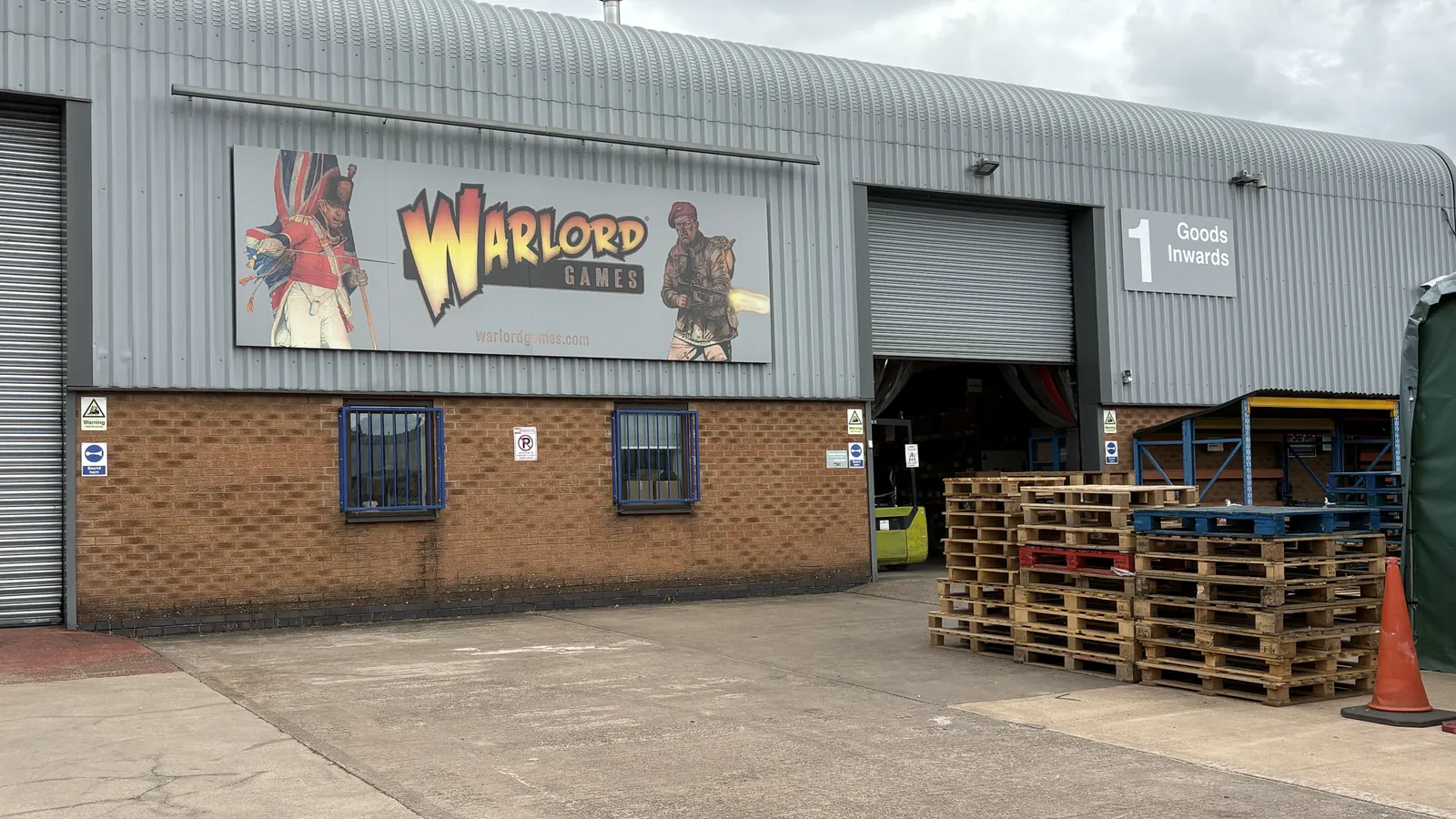
Warlord Games.
Founded in 2007 by two people laid off from Games Workshop — the company behind Warhammer. They used their redundancy money to make the first box of plastic Roman soldiers.
Today: 110-odd people. 1,100-plus dealers.
Their most successful product is a tabletop World War II wargame called Bolt Action — 40% of revenue. They now have more product lines, all running under one roof, four production processes going simultaneously.
I watched their manufacturing operation. The front-end production is still largely done by hand. And while I was taking it all in, I kept asking myself: why haven't they automated?
The traditional resin workshop
Alexander has worked here for twenty years.
Silicone moulds, a measuring cup, two-part epoxy mixed 1:1, tinted grey — the colour chosen to match the Games Workshop standard set 25 years ago.
His job is to pour liquid resin into silicone moulds, tray by tray. Wait for it to set. Demould. Inspect. Repeat. Each tray holds dozens of cavities, each producing one 28mm wargaming miniature.
One person, by hand, can complete 15 trays a day. With the new machine, 23. At full capacity, the line puts out 6,000 miniatures a day.
Silicone mould: £100–1,000. Steel injection tool: £20,000+.
The Italian operations manager said it flat:
"We know if we make it in plastic we'll never get the money back. But in resin we can have the elephant."
The elephant is every obscure German halftrack, every niche historical unit — products that could never justify injection tooling, but that players still want. Without silicone casting, those elephants simply don't exist.
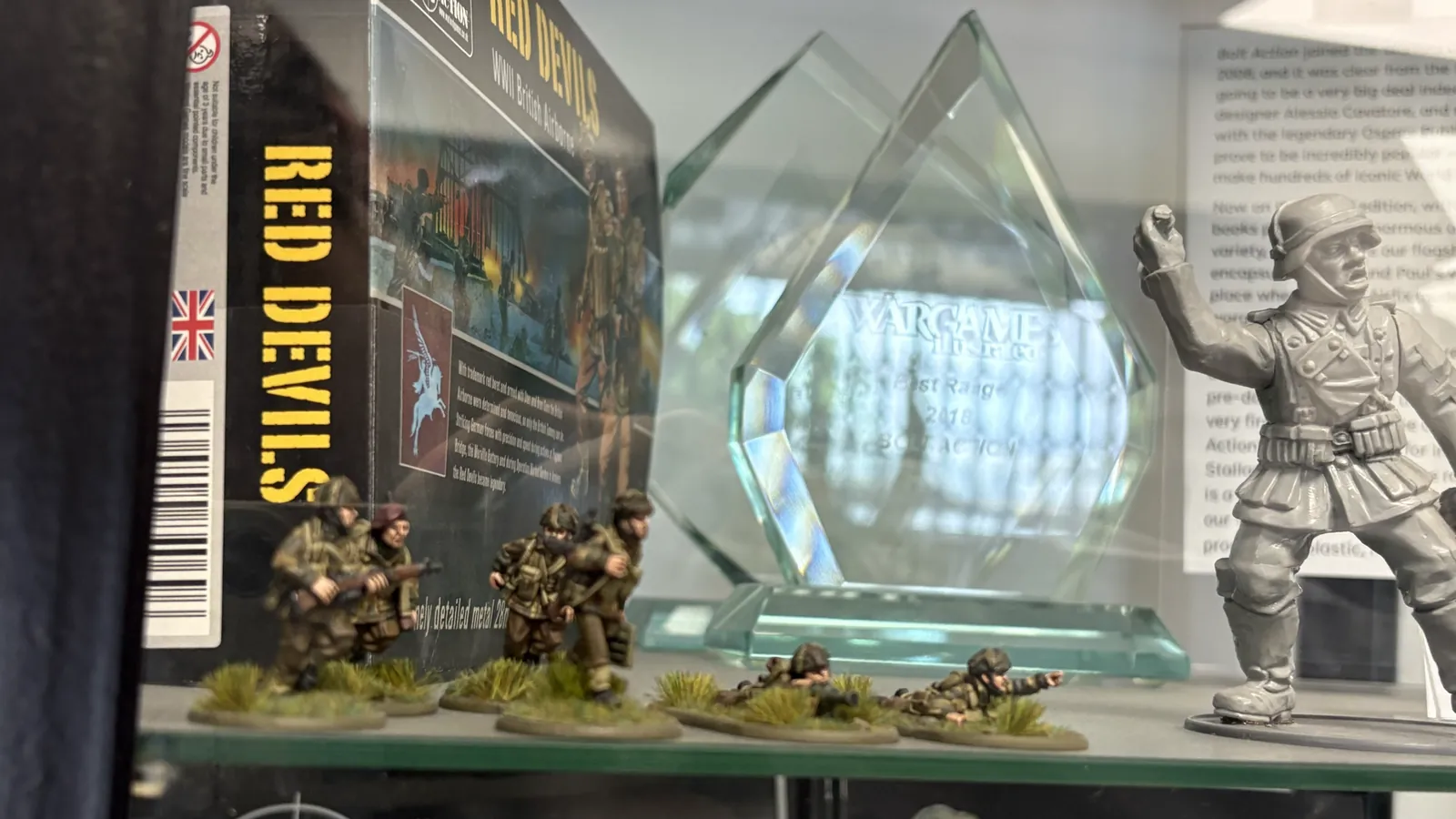
Why not replace it with resin 3D printing?
In the design studio, I asked one of the sculptors: once a model is designed, how do you get a prototype? 3D printing, he said. One or two prints — for himself and the painters — then the confirmed design files go to the casting floor.
So they know 3D printing. They use it. Just not for production.
John Stallard was direct: printed parts are fragile. Poor durability, poor ageing resistance — they don't meet the physical requirements for wargaming miniatures. A prototype can be fragile. A product can't. Maybe one day it'll be different, but not yet.
Silicone casting survives because right now it's the only small-batch process that's both cheap enough and strong enough. That's why this line exists.
Two days from design to sale
The metal workshop. Centrifugal casting — the same process used in jewellery making. A metal mould costs a few hundred pounds. Time from finished design to product on sale: two days.
The metal team lead:
"There is an advantage to metal that nothing else has — we can bring a product to market very quickly."
As he said it, he scooped a ladle of molten metal and poured it onto the platform beside him. It solidified almost instantly.
I was standing right there. The speed genuinely shocked me.
Metal is their market validation engine. Uncertain products go to metal first. If they sell, move to resin or plastic. If they don't, the loss is negligible.
He added:
"If you live in America, you probably got something I made in the last two days."
Not hyperbole. Every Warlord metal miniature sold globally comes out of this team.
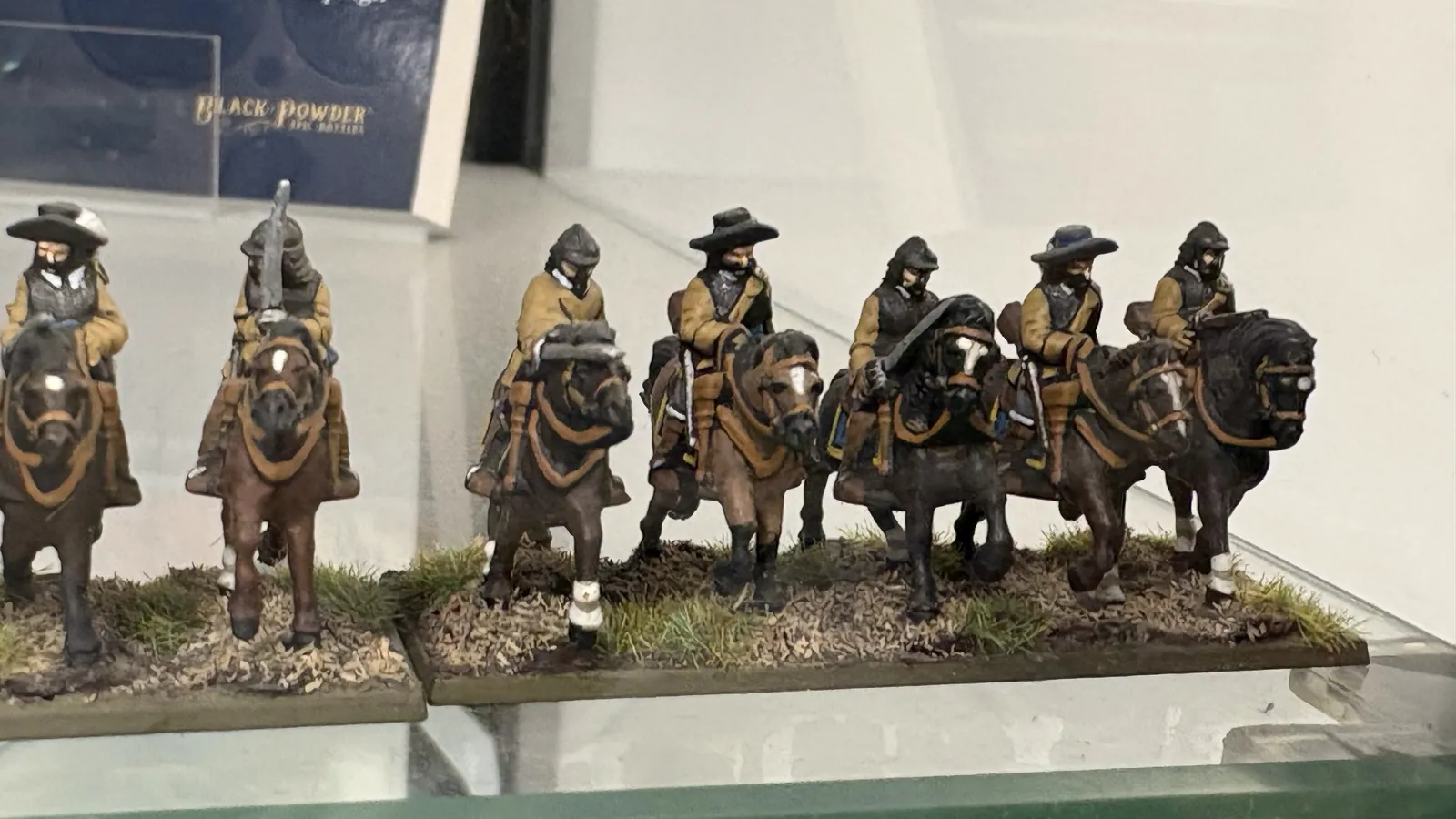
| Process | Tooling cost | Output | Purpose |
|---|---|---|---|
| Metal centrifugal casting | Few hundred £ | 100–200/day/person | Market validation |
| Traditional silicone casting | £100–1,000 | Up to 15 trays/day/person | Limited runs, long-tail |
| Warlord Resin (Spanish pressure machine) | Low (silicone) | 23 trays/day/machine | Faster small-batch |
| Injection moulding | £20,000+ | Very high | Flagship products |
Validation → prototyping → small-batch → mass production. One process per stage, all running under one roof. Every process has its reason to exist. Together they make the complete Warlord Games universe possible.
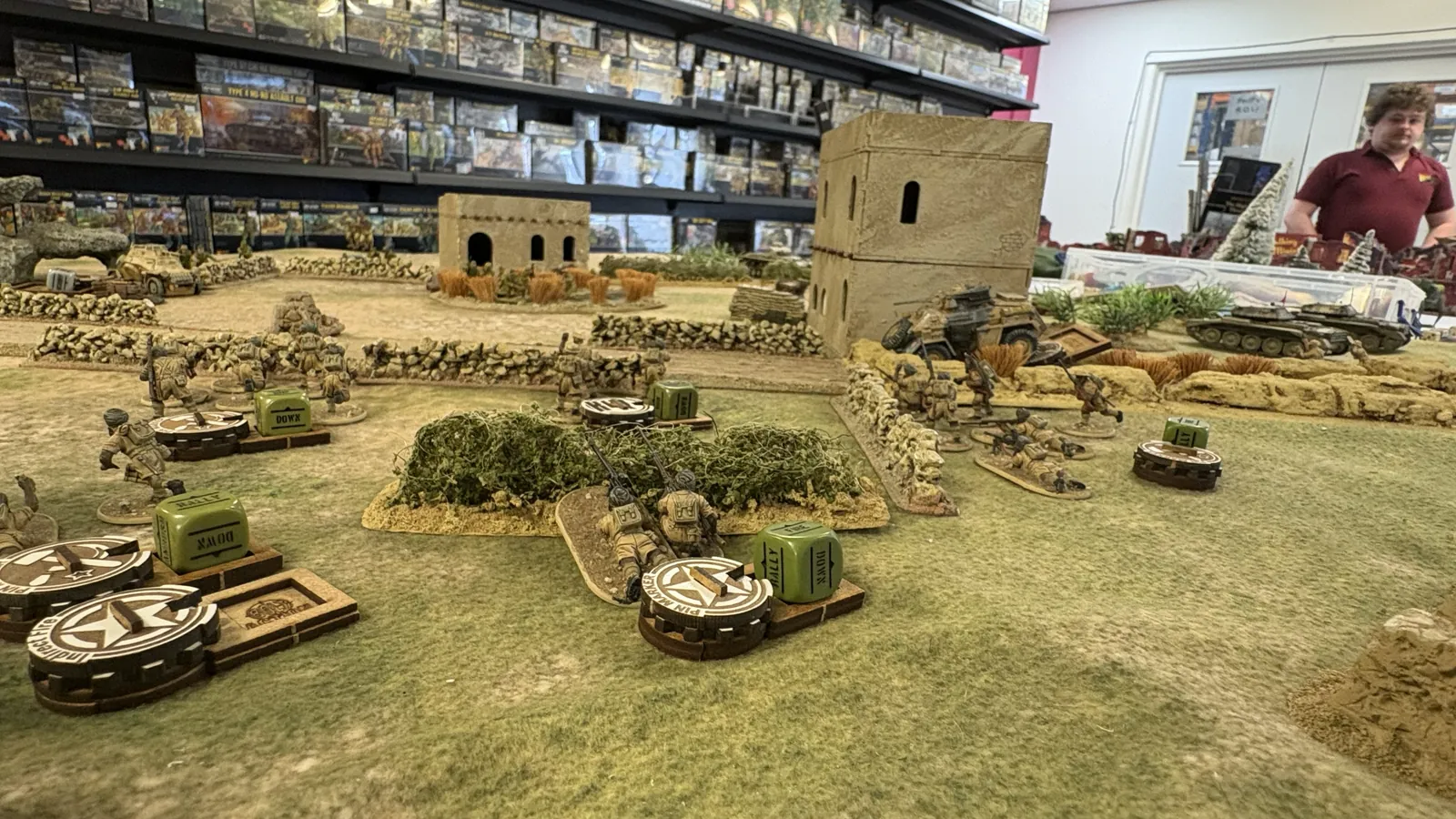
The birthplace of the Industrial Revolution. Why still so primitive?
Britain taught the world to replace hands with machines. And yet here they are, still doing it the old way.
Because they did the maths. Every line has a strategic position nothing else can fill.
Hand production keeps alive the demand that's too small for scale, but real enough to matter. Serve the niche. Charge the premium.
In China, the manufacturing logic runs the other way: scale effects, maximum throughput, marginal cost to zero.
That logic has a blind spot. When demand is too small, too niche, too obscure — it gets abandoned. Not because the demand isn't real. Because it doesn't fit the model. Mantic Games' print room — same city, same industry — shows the exact opposite logic: rack up cheap machines, serve the niche, survive.
Warlord's logic: because we have silicone moulds and hand-casting, we can have the elephant.
This isn't craftsmanship. It isn't sentiment. It's a commercial decision that's been fully costed out. They know the mould cost, the tray yield, why this line is twenty times cheaper than injection tooling, and what disappears if they shut it down.
What Chinese manufacturing most lacks is the courage to choose not to scale — after doing the maths.
Full-colour printing: they didn't know this existed
Halfway through the tour, I took out a full-colour 3D printed sample and showed it to the Italian operations manager. Colour out of the machine. No painting, no post-processing.
His first reaction:
"So basically 3D printer with the color already, no paint, no any finish processing?"
He genuinely didn't know.
He immediately brought over their most 3D-printing-experienced engineer. The engineer looked at the samples:
"That's pretty cool."
And that was it. No follow-up. No objection. No business conversation.
This isn't rejection. It's a knowledge gap — and the opening of a niche market. They're not "aware but uninterested." They're "unaware, so not yet positioned."
One physical sample does more than an hour of explanation.
John Stallard told me directly:
"In 5-10 years, every man and woman will have one of those in their kitchen, but not yet."
The direction is right. But I'd argue the timeline will move faster than anyone expects.
Warlord released their first STL file this April — free to download. Probably pushed there by manufacturing cost rather than strategic intent. But it's a start.
One visit won't close the gap. But a few more people walking through that door with samples in their pocket might.
Part two of a series from my UK research trip · Next: Mantic Games, June 10
Lemon Wang · lemon.wang
Key Takeaways
- Warlord Games keeps four production methods under one roof because each one owns a different job: validation, small batch, long-tail demand, or flagship scale.
- Hand production is not always nostalgia. In niche miniature manufacturing, it can be the cheapest way to keep obscure products alive.
- Full-color 3D printing did not face rejection here. It faced a knowledge gap. A physical sample changed the conversation faster than a pitch could.
Field FAQ
Why does Warlord Games still use hand casting? Because many historical miniatures are too niche for injection tooling but still valuable to players. Silicone molds and hand casting keep those long-tail products economically possible.
Why not replace resin casting with 3D printing today? For production parts, Warlord still worries about durability and ageing resistance. They use 3D printing for prototypes, but not yet as the main production process.
Where does full-color 3D printing fit? It fits where painting is the bottleneck and color is part of the product value. The market is not fully aware yet, which makes direct sampling more important than abstract marketing.