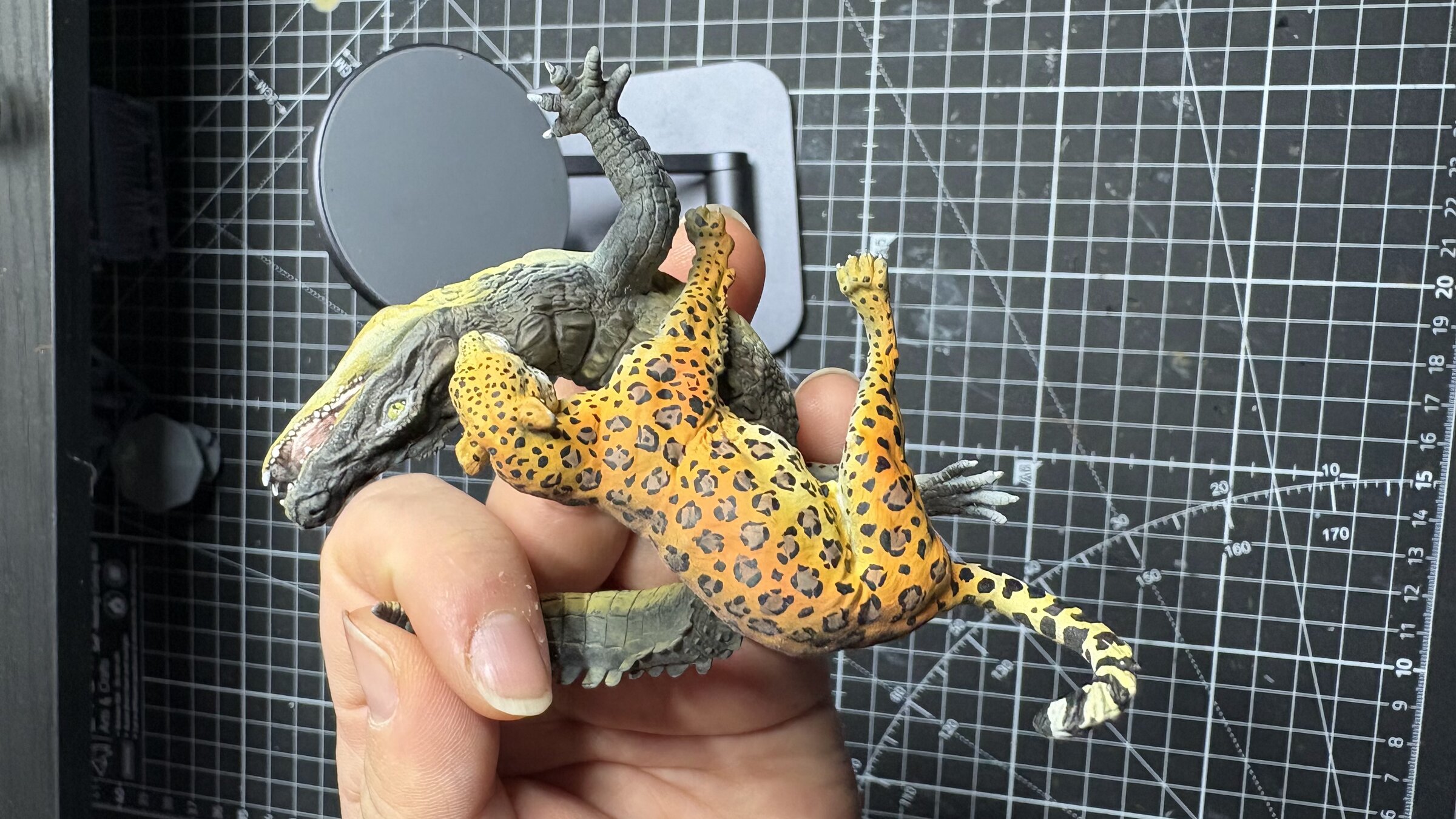
I spent part of Monday evening in Adam’s studio. He makes and sells miniatures, and he was one of the first people to buy a Flashforge CJ270, a full-colour 3D printer.
He walked me through how he gets a model ready to print. There was a step in it, well before the file reaches the printer, that he still does by hand. To him, this was an ordinary part of the job. I hadn’t thought about that step at all.
The CJ270 is still new, and right now every early buyer gets close attention. I thought about that on my way out. How much of that attention survives once a product becomes mature?
When every user counts
When a product is new, you can still see how much you’re learning from each person. You remember who tried it, what they were trying to do, and where they got stuck. A single evening can change what you think the product needs to become, and nobody asks whether the evening was worth it.
That changes as the product grows up. There are more users, more data and more reports. Seeing any one person starts to feel optional.
When we have plenty of information
A mature product gives a team plenty to work with. We have usage data, support tickets, market reports, and competitors to study. It’s easier now to pull themes from all that material using AI. I use those tools too.
The risk comes when reading about users quietly replaces watching them work. A dashboard can show how many people abandon a step we’ve chosen to measure. A summary of support tickets can show which problems people have already found a way to describe. People also adapt a file, check a result by eye, or go back to a tool they already know. They may have done it that way for years. To them, it’s just how the work gets done. A team can collect more information about its users every year and still know very little about that part of their day.
Adam’s step was like that. If I start from the printer, I’m likely to ask about what happens once a miniature comes out of it. Watching him go through his files pointed me somewhere else: to the work that happens before the printer is involved at all.
It’s easy for a team to build a coherent explanation in a room full of people who have read the same material. Each person adds something plausible. Eventually, someone has to decide which part of the workflow we should make easier. I want some of the evidence for that decision to come from seeing the work itself.
What a visit brings back
Before a visit, I’d ask myself whether the trip would be worth it: the time it would take, what I wanted to ask, whether I could come back with an answer I could use. For an evening with one person, it felt like a fair question. I still think it is.
What I hadn’t accounted for was how often a visit changes the question. I can go in wanting to understand a printing step and come out realising I need to understand what the person was doing before they even opened our software. Knowing how many people a problem affects helps me decide how to prioritise it. First I have to notice what the problem is. The cost of a visit is clear before I go. This part only shows up afterwards, and it took enough face-to-face conversations for me to trust that it would.
I’ve already taken the question from Adam’s studio back to the team. We don’t know the answer yet. How much that step matters, and how many other buyers do something similar, still needs checking. But I wouldn’t have known to ask.
I still ask myself what a visit might teach me before I go. I also ask what I’d be assuming about that person’s work if I stayed in the office.